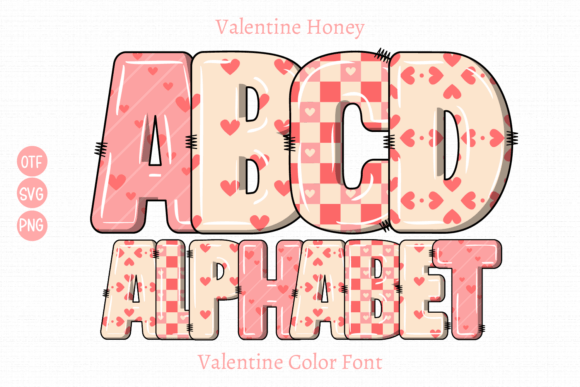
Unveiling Valentine Honey: A Font with Genuine Character
When you’re building a brand or crafting a personal project, the typography you choose does more than just display words. It sets a mood, tells a story, and creates an immediate emotional connection with your audience. I’ve seen countless projects stumble with fonts that are either too sterile or too chaotic. Finding that sweet spot—a typeface with personality that doesn’t overpower the message—is a genuine challenge. That’s what makes discovering a font like Valentine Honey so rewarding. It’s not just a collection of letters; it’s a crafted asset with a distinct, approachable voice.
The Anatomy of a Charming Typeface
At first glance, Valentine Honey presents itself as a handwritten font with a soft, rounded quality. But look closer, and you’ll notice its construction is surprisingly thoughtful. The letterforms have a consistent, gentle bounce, avoiding the erratic spacing that can make many script fonts difficult to read in longer blocks. The terminals are slightly tapered, not blunt, giving it a refined yet playful finish. This isn't a font that screams for attention with wild swashes; instead, it whispers with confidence. Its style sits comfortably between a casual script font and a friendly display font, making it incredibly versatile.
The overall appeal of Valentine Honey lies in its authentic warmth. It evokes feelings of handcrafted sincerity—think of a note written by a friend or the label on a artisanal product. For designers and entrepreneurs, this is a powerful tool. It can soften the corporate edge of a brand identity, add a human touch to digital interfaces, or inject pure joy into celebratory materials. It’s a premium font that understands the value of character in modern typography.
Where Valentine Honey Truly Shines: Practical Applications
Understanding a font’s personality is one thing; knowing where to deploy it is where strategy comes in. Let’s break down the real-world scenarios where Valentine Honey excels, moving beyond theory to practical application.
Branding and Identity Work
For businesses targeting a family-friendly, artisanal, or lifestyle-oriented market, this font can become a cornerstone of their brand identity. It works beautifully for:
- Logo Design: Especially for bakeries, boutique shops, wedding planners, children's brands, or wellness studios. Pair it with a clean sans serif font for body text to create a balanced, professional hierarchy.
- Packaging Design: The handwritten quality adds a tactile, personal feel to product labels, making items on a shelf feel more approachable and crafted.
- Social Media Graphics: Its high readability at various sizes makes it perfect for quotes, announcements, and engaging call-to-action text on platforms like Instagram and Pinterest.
Editorial and Digital Publishing
In the world of blogs, magazines, and web design, personality is key to standing out. Valentine Honey can serve as a powerful accent font.
- Blog Headers and Pull Quotes: Use it for article titles or standout quotes to draw the reader's eye and establish a friendly, conversational tone.
- Newsletter Design: A subject line or key message set in this font can significantly boost open rates by feeling more personal and less automated.
- Web Design Elements: It’s ideal for button text, menu item labels, or featured product names on e-commerce sites, guiding users with a touch of charm.
Personal and Commercial Projects
This is where the font’s versatility becomes a major asset for crafters, hobbyists, and small business owners alike.
- Invitations and Greeting Cards: From wedding suites to birthday cards, it provides the perfect blend of elegance and playfulness.
- Planners and Photo Albums: Embellish your personal projects or create sellable templates with a font that feels both decorative and functional.
- Marketing Collateral: Think flyers, menu specials, or sale announcements for local businesses. It grabs attention without feeling aggressive.
Making It Work: A Practical Guide to Using Valentine Honey
Adopting any new creative font into your workflow requires a bit of strategy. Here’s how to integrate Valentine Honey effectively to enhance, not hinder, your designs.
Evaluating Project Fit and Font Pairing
First, consider your audience and message. Is the tone playful, romantic, or casual? If yes, you’re on the right track. For projects requiring extreme formality or technical precision, a different typeface might be better. The magic often happens in the pairing. Valentine Honey pairs exceptionally well with neutral, geometric sans serif fonts or simple serif fonts. The contrast allows its personality to pop without causing visual clutter. A common mistake is pairing it with another ornate or script font, which can quickly become illegible and overwhelming.
Readability and Hierarchy Considerations
While highly legible for a handwritten font, it’s still a display typeface. Use it primarily for headlines, subheadings, and short phrases. Avoid setting entire paragraphs of body copy in it. A good rule of thumb: if the text is meant to be read quickly and easily (like a product description or a blog post), default to a standard sans serif or serif font for the body and use Valentine Honey for emphasis. This creates a clear visual hierarchy, guiding the viewer’s eye through your content in an intuitive way.
Leveraging Included Styles and Licensing
A quality commercial font like Valentine Honey often comes with more than just the basic alphabet. Check for included stylistic alternates, ligatures, or swashes. These can be used sparingly to add a unique flourish to a logo or a monogram. Furthermore, always review the licensing. For entrepreneurs and businesses, ensuring you have the proper commercial license for a design asset is non-negotiable. It protects your work and respects the craft of the type designer.
In the end, Valentine Honey