Letterboard: Realism Meets Retro in a Creative Font
There’s something undeniably nostalgic about a felt letterboard. It’s the medium of choice for cheeky coffee shop quotes, wedding photo booth signs, and that one friend who updates their kitchen board with puns every week. Capturing that tactile, analog warmth in digital design used to require hours of photography or clumsy clipart. Enter the Letterboard typeface—a creative font that doesn't just mimic the style; it brings the actual physical characters to your screen.
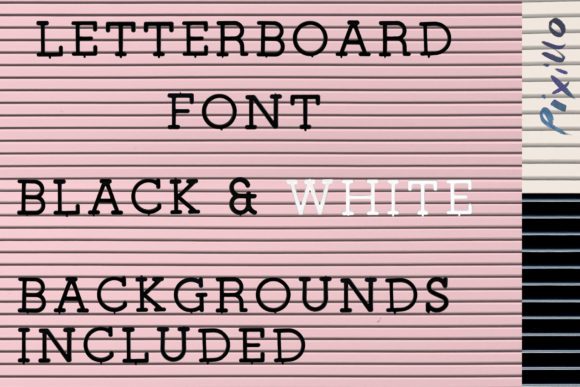
Unlike standard vector typefaces where every curve is mathematically perfect, Letterboard is an uppercase font constructed from real letter board characters and symbols set. This isn't just a stylistic choice; it’s a textural one. Because the font is bitmap-based, it retains the subtle shadows, felt texture, and slight imperfections of physical plastic letters pressed against a fabric background. It is intentionally "wonky" to provide that authentic, handmade effect. If you are looking for sterile perfection, look elsewhere. If you want your audience to feel like they are standing right in front of a sign, this is your tool.
Breaking the Mold: The Bitmap Reality
One of the most important technical aspects to understand about this premium font is its file structure. This product is a color font, specifically utilizing OpenType-SVG technology. This allows the typeface to contain high-fidelity color data and transparency directly within the font file. When you type a capital "A," you aren't getting a black outline; you are getting a red plastic character sitting on a grey felt background.
However, this realism comes with a specific constraint: it is a bitmap. In modern typography, we are used to scaling vector fonts from the size of a postage stamp to a billboard without losing quality. Letterboard operates differently. Because it relies on rasterized data to maintain that authentic texture, it has a maximum size you can work at before the pixels become visible. This is a crucial consideration for print design and large-format signage. For web design and social media graphics, however, it performs beautifully at standard screen resolutions.
The Ultimate Flexibility: Scene-Creator PNGs
The creators of this asset clearly understand that designers don't always work within the strict boundaries of text tools. To ensure you can use this across different applications, all the characters are included as individual PNGs. This "scene-creator" style asset pack is a game-changer for users of software that struggles with complex OpenType features.
Are you working in a program that handles SVG fonts poorly? Or perhaps you need to place a letter at a specific angle that a standard text baseline won't allow? The included PNG files allow you to build your letterboard message in any design program, from Photoshop to Canva. Furthermore, the package includes four distinct colors of background board, allowing you to match the aesthetic to your specific brand identity without needing to recolor the background layer manually.
Strategic Applications: Where Letterboard Shines
As a display font, Letterboard is not designed for long-form body text. Trying to read a paragraph set in this typeface would be exhausting for the eye. Instead, its strength lies in high-impact, low-word-count environments. Think of it as the loudspeaker of your typographic hierarchy.
Branding and Logo Design:
For businesses that want to convey a sense of community, nostalgia, or approachability, this font is a powerful asset. A bakery, a vintage clothing store, or a community center could use Letterboard in their logo design to instantly signal a welcoming atmosphere. It pairs exceptionally well with a clean sans serif font for body copy, creating a contrast between the textured, playful headers and the professional, readable content.
Editorial and Packaging Design:
In editorial design, this typeface serves as a fantastic pull-quote generator. Instead of using standard serif font or script font for subheadings, a letterboard style adds a three-dimensional pop to the page layout. Similarly, in packaging design, it works wonders for products that emphasize being "handmade" or "retro." It breaks the flat monotony of standard labels.
Digital Marketing and Social Media:
Instagram stories, TikTok overlays, and Pinterest pins thrive on visual engagement. The texture of the letterboard draws the eye because it mimics the physical objects we interact with in the real world. It creates an immediate focal point for announcements, sale alerts, or motivational quotes. The fact that it includes background boards means you can create a standalone graphic that looks like a photo, perfect for quick-turnaround content.
Practical Guidance for Designers and Creators
Integrating a creative font like this into your workflow requires a shift in mindset compared to working with standard vector typefaces like Helvetica or Garamond.
- Software Compatibility: This is a critical checkpoint. This is an OpenType-SVG font. It is compatible with recent versions of Photoshop, Illustrator, Silhouette, and Inkscape. However, the OTF and/or TTF files are not compatible with Cricut machines. If you are a crafter using a Cricut, you will need to use the individual PNG files to create your cut paths or print-and-cut designs rather than typing directly into the machine's software.
- Readability and Sizing: Because the characters are based on physical plastic pieces, they have inherent spacing. You may need to adjust kerning manually to get the visual rhythm right for short phrases. Keep the font size large enough to appreciate the texture, but be mindful of the bitmap limits if printing at high DPI.
- Font Pairing: Letterboard demands a calm partner. Pairing it with another handwritten font or a heavy slab serif can result in visual clutter. The best font pairing strategy is usually a geometric sans-serif or a light serif. Let the letterboard be the star of the show, and let the secondary font provide the structure.
The "Wonkiness" Factor
The description of the font having "some wonkiness thrown in" is actually a feature, not a bug. In the world of physical letterboards, letters are rarely perfectly aligned. They tilt slightly; the spacing is inconsistent due to the physical width of the plastic. This font embraces that imperfection. It provides a human touch that polished, vectorized modern typography often lacks. It tells the viewer that a real human being arranged these letters, which builds a subconscious layer of trust and authenticity.
Final Thoughts on This Design Asset
Letterboard is more than just a typeface; it is a design asset that bridges the gap between digital creation and physical reality. Whether you are a small business owner creating flyers, a blogger designing header images, or a marketer looking to stop the scroll on social media, this font offers a distinct personality.
By understanding its bitmap nature, respecting its size limitations, and utilizing the included PNGs for complex compositions, you can leverage this tool to add warmth, nostalgia, and high-impact visual interest to your next project. It’s a reminder that sometimes, the best way to capture attention is to look like something you can actually touch.