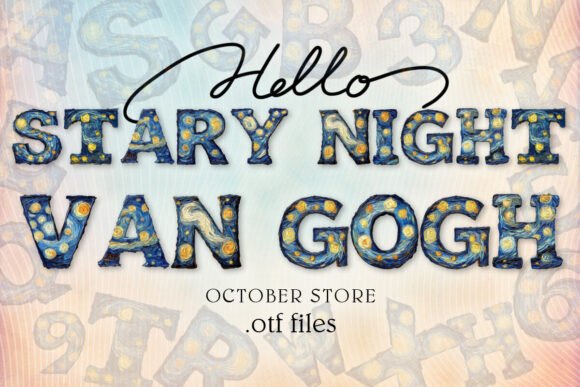
The Starry Night Van Gogh Font: A Brushstroke of Genius
There is a distinct difference between a typeface that simply holds text and one that tells a story. When you work with the Starry Night Van Gogh Alphabet Font, you are not just arranging letters; you are channeling the raw, swirling energy of Post-Impressionism. This premium font captures the essence of Vincent van Gogh’s legendary oil painting style, transforming standard characters into textured, expressive art. For designers, brand strategists, and content creators, this offers an immediate injection of personality that standard sans serif or serif fonts simply cannot replicate.
Understanding the Visual Personality
The core appeal of this font lies in its ability to mimic the tactile quality of thick oil paint. Unlike the clean, sharp edges of modern typography or the rigid lines of a geometric sans serif font, the Starry Night Van Gogh typeface features organic curves and rich textures. Each of the 36 characters—comprising the full alphabet and numbers zero through nine—feels hand-painted. You will notice the "swirl" effect, reminiscent of the wind in the painting, which gives the text a sense of movement even when static. This makes it an exceptional display font, designed to be the visual anchor of a layout rather than the body copy.
However, it is crucial to acknowledge the technical nature of this design asset. As an OpenType-SVG color font, the file contains vector data that preserves the high-fidelity brushstroke textures and colors. This means the characters are not flat; they have depth. This is a significant upgrade from standard vector fonts where you have to manually add effects to achieve a painterly look. The visual impact is immediate: it evokes a sense of artistic heritage, creativity, and emotional depth.
Strategic Applications: Where Art Meets Design
Knowing what a font looks like is one thing; knowing how to use it effectively is the mark of a professional. The Starry Night Van Gogh font is a powerful tool, but it demands a specific context to shine. Because of its intricate texture and strong personality, it works best in scenarios where readability at small sizes is less important than the immediate emotional response.
Branding and Logo Design
For businesses in the creative sector—art studios, boutique bakeries, independent bookshops, or high-end craft vendors—this font can be the cornerstone of a brand identity. Using it for a logo creates an instant association with artistry and craftsmanship. However, a strong brand strategy involves balance. You would likely pair this creative font with a clean, neutral sans serif font for your website body copy to ensure legibility while using the Van Gogh style for headers to establish the mood.
Packaging and Editorial Design
In the realm of packaging design, shelf appeal is everything. A product box featuring the Starry Night typography immediately signals "handmade" or "artisanal" quality. Similarly, in editorial design, such as magazine covers or book titles, this typeface can replace the need for commissioned hand-lettering. It provides that bespoke look without the weeks of turnaround time.
Digital and Social Media
On digital platforms, attention spans are short. A striking heading in the Starry Night style can stop a user from scrolling. It is highly effective for social media graphics, YouTube thumbnails, or website hero sections where you need to convey a message of "creativity" instantly. It bridges the gap between classic fine art and modern digital communication.
Technical Implementation and Pairing Strategies
Adopting a new font into your workflow requires practical consideration. Because the Starry Night Van Gogh Alphabet Font is an OpenType-SVG file, compatibility is a key factor. It functions beautifully in professional design environments like Adobe Photoshop, Illustrator, and Inkscape. It is also compatible with Silhouette machines, making it a viable option for physical crafting projects like vinyl decals or heat transfers.
Note: This specific file format is not compatible with Cricut Design Space. If you are a crafter relying on Cricut hardware, you would need to convert the text to a standard path or outline in a compatible program before importing the shape, which requires a few extra steps but is certainly manageable.
Mastering Font Pairing
The golden rule of typography is contrast. Because the Starry Night font is expressive, textured, and has a distinct vintage personality, it pairs best with fonts that are quiet and structural.
- With Sans Serif Fonts: Pairing it with a geometric sans serif (like Montserrat or Helvetica) creates a modern contrast. The clean lines of the sans serif allow the artistic details of the Van Gogh font to pop without visual competition.
- With Serif Fonts: If you want a more traditional, "library" feel, pair it with a classic serif like Garamond. This leans into the historical aspect of the painting, creating a sophisticated, scholarly aesthetic.
- Avoid: Do not pair this font with other script fonts or overly decorative handwritten fonts. The clash of two "loud" personalities will result in visual chaos and make your design illegible.
Evaluating Fit for Your Project
Before committing to the Starry Night Van Gogh font, run a quick audit of your project needs. This is a display typeface, meaning it is built for impact, not for long paragraphs of text. If you try to write a full blog post or a brochure body with this font, the visual noise will fatigue the reader’s eyes.
Ask yourself these questions:
- What is the medium? This font excels in print (high resolution) and digital screens. It is excellent for t-shirt designs and merchandise.
- Who is the audience? It appeals to those who appreciate art, history, and creativity. It might feel out of place on a corporate banking website or a technical manual.
- Does it support my message? If your message is about stability and rigidity, choose a different font. If your message is about innovation, creativity, or nostalgia, this is a perfect fit.
Ultimately, the Starry Night Van Gogh Alphabet Font is more than just a set of characters; it is a design asset that brings the weight of art history to your projects. By using it strategically for headlines, logos, and accent text, you can elevate a standard layout into something truly memorable. It allows you to leverage the emotional resonance of one of the world's most famous paintings, giving your brand or project a voice that is sophisticated, textured, and undeniably artistic.